Coming home usually involves more than walking through the door. There are shoes to kick off, coats to hang, backpacks to unload, and grocery bags to put away. Add a purse, a handful of mail, and a dog waiting for dinner, and the entrance to your home quickly becomes one of its hardest-working spaces.
Whether you have a dedicated mudroom, a laundry room that does double duty, or a small entry with room for a few thoughtfully designed cabinets, these spaces deserve careful attention. At Artistic Kitchens, we consider how you arrive, what you carry, and where everything needs to go. Good design can make those everyday transitions feel easier and keep the overflow from spreading into the rest of your home.
Start with What You Need to Store
Coats and shoes are only the beginning. Hats, gloves, backpacks, purses, reusable grocery bags, umbrellas, and dog leashes all need a place to land. These flexible spaces often hold the less glamorous essentials, too: dog food, bulk paper supplies from Costco, cleaning products, and bins for recycling.
Before planning cabinetry, it helps to take stock of what actually lives here. How many pairs of shoes need to be accessible? Do you prefer to hang your coat on a hook or tuck it into a closet? Where do the grocery bags go after everything is unpacked?
The answers shape the design. A cabinet sized for a large bag of dog food serves a different purpose than a shallow drawer for hats and gloves. Planning for those differences makes storage more useful from the start.
Give Everyday Items an Easy Landing Place
Storage works best when it fits naturally into your routine. A hook near the door makes it easy to hang a backpack. A bench gives you somewhere to sit while pulling on boots. Shoe storage keeps the walkway clear.
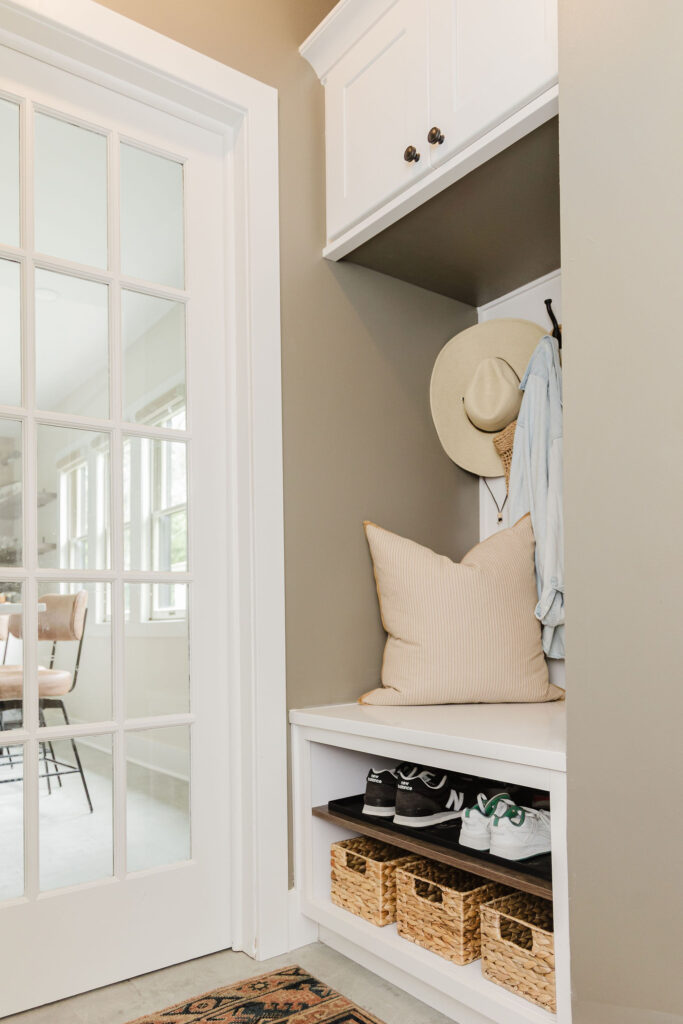
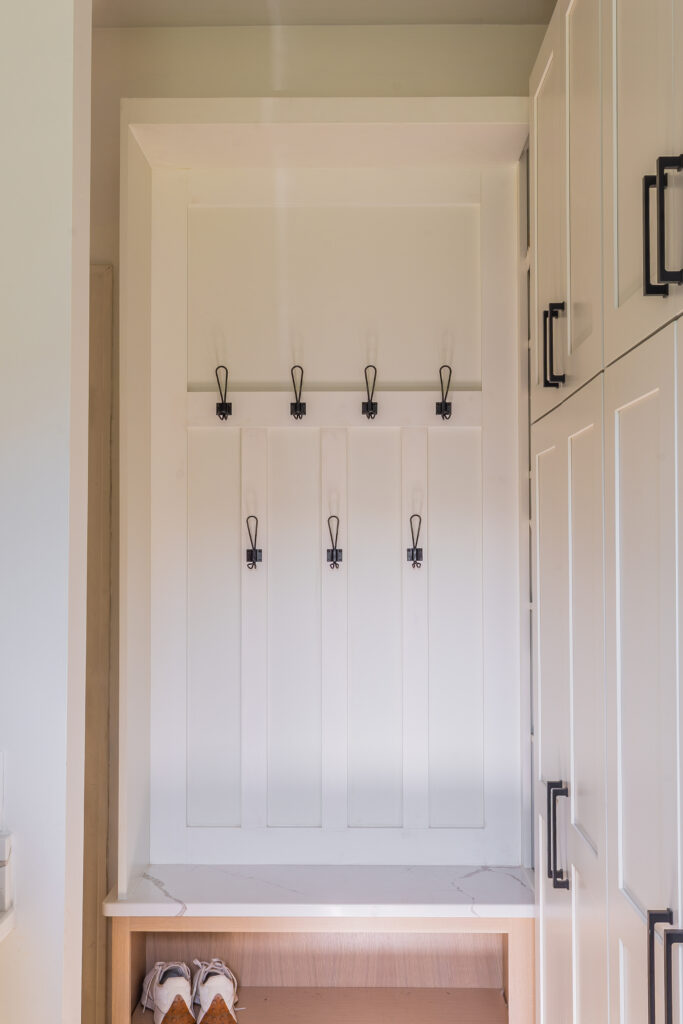
In our Century Farmhouse Revival project, the small side entry to the home combines a bench, shoe cabinet, hooks, and a cabinet above. Together, these elements provide a mix of accessible storage and enclosed space. There is somewhere to sit, somewhere to hang what you use every day, and somewhere to tuck other belongings out of sight.
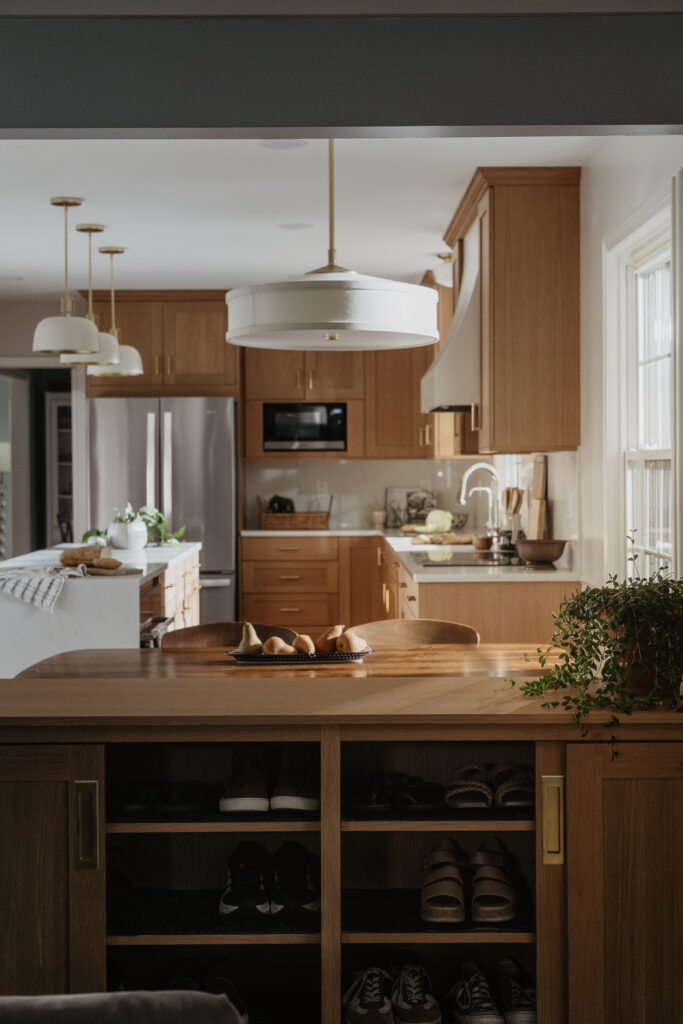
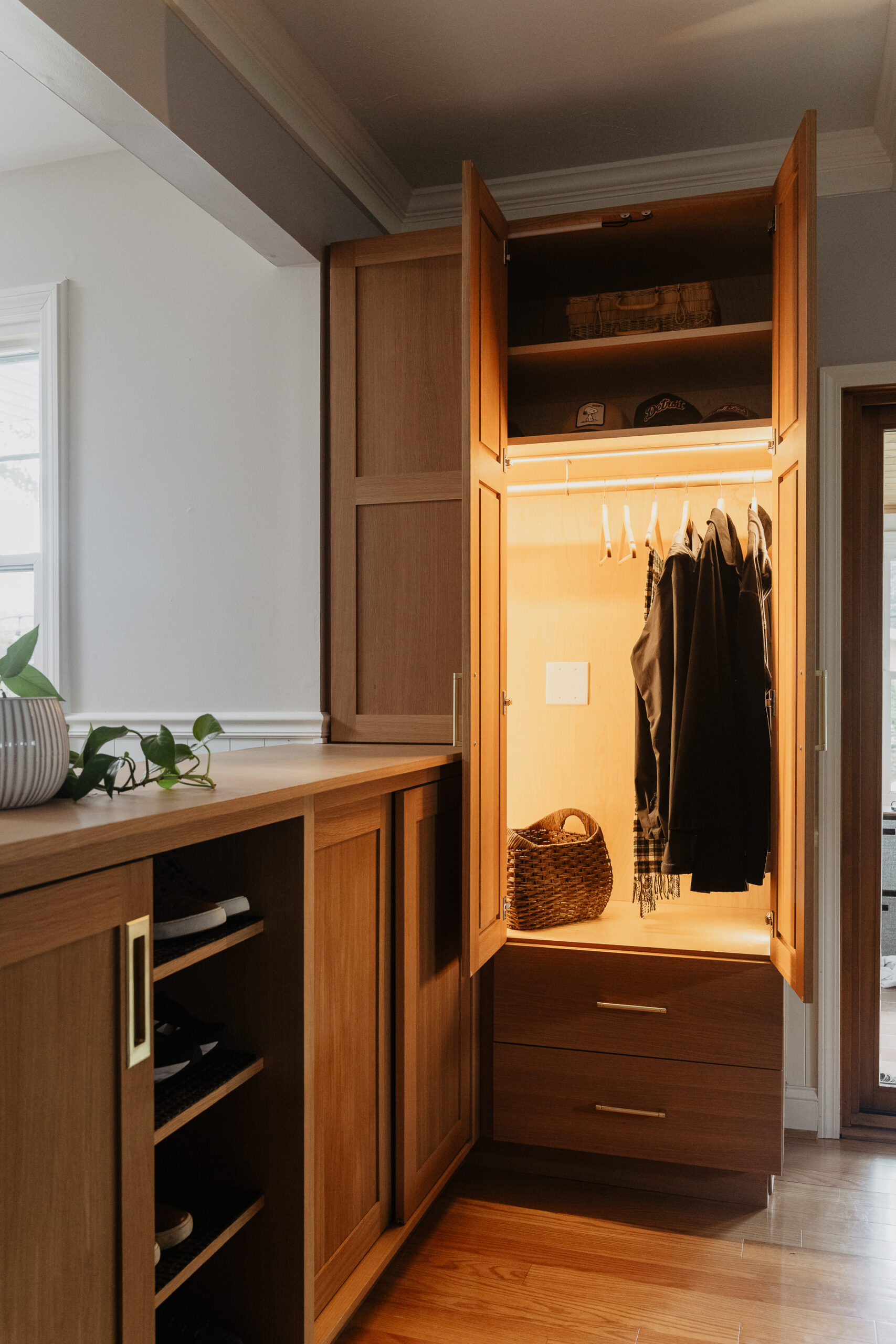
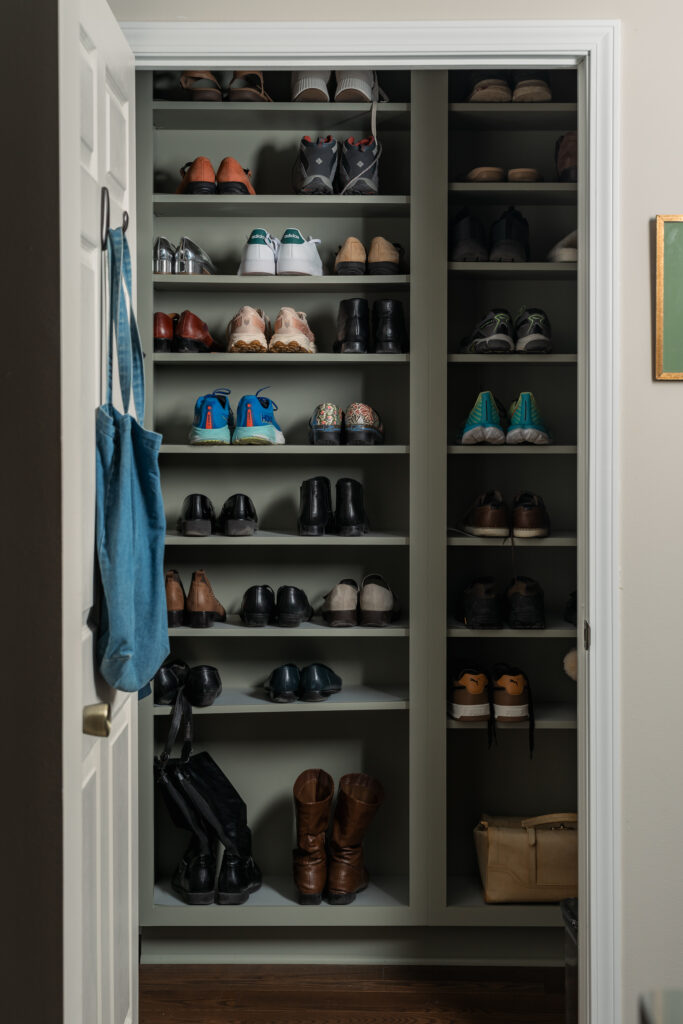
The closet and shoe cabinets in Sand and Stone offer another approach to organizing an entry. Giving outerwear and footwear dedicated storage helps contain the everyday accumulation right where it happens. A hanging rod and motion-activated lighting in the tall closet cabinet make it easy to find the right coat before heading out the door.
The goal is to make putting things away convenient enough that it becomes part of coming home.
Make Shared Spaces Work Harder
Many homes ask one room to serve several purposes. Laundry may share space with a bathroom, an entry may also hold pantry storage, and a back hallway may become the household’s main drop zone.
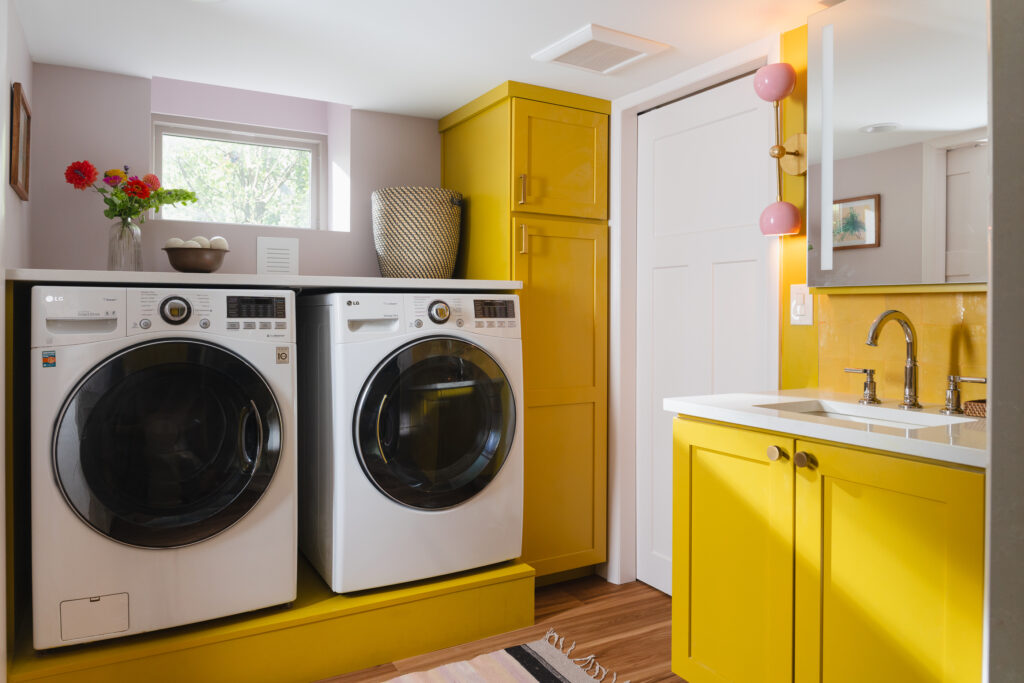
In The Art of Making Space, the combination laundry and bathroom demonstrates how cabinetry can support multiple functions within one room. Laundry and storage cabinets give household necessities a designated home, helping the shared space stay organized and comfortable to use.
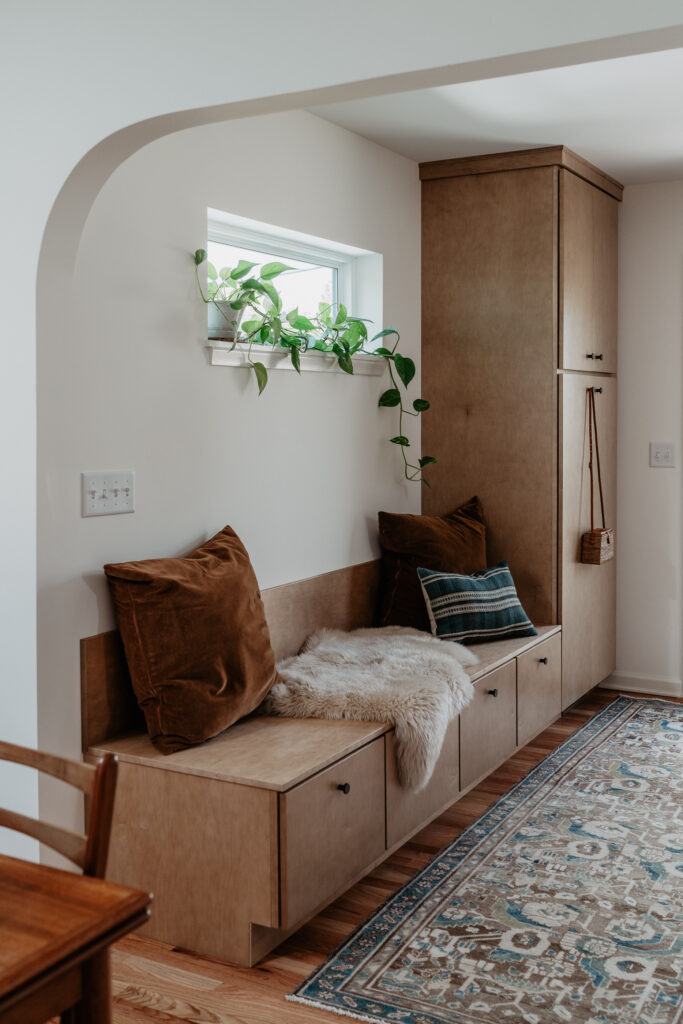
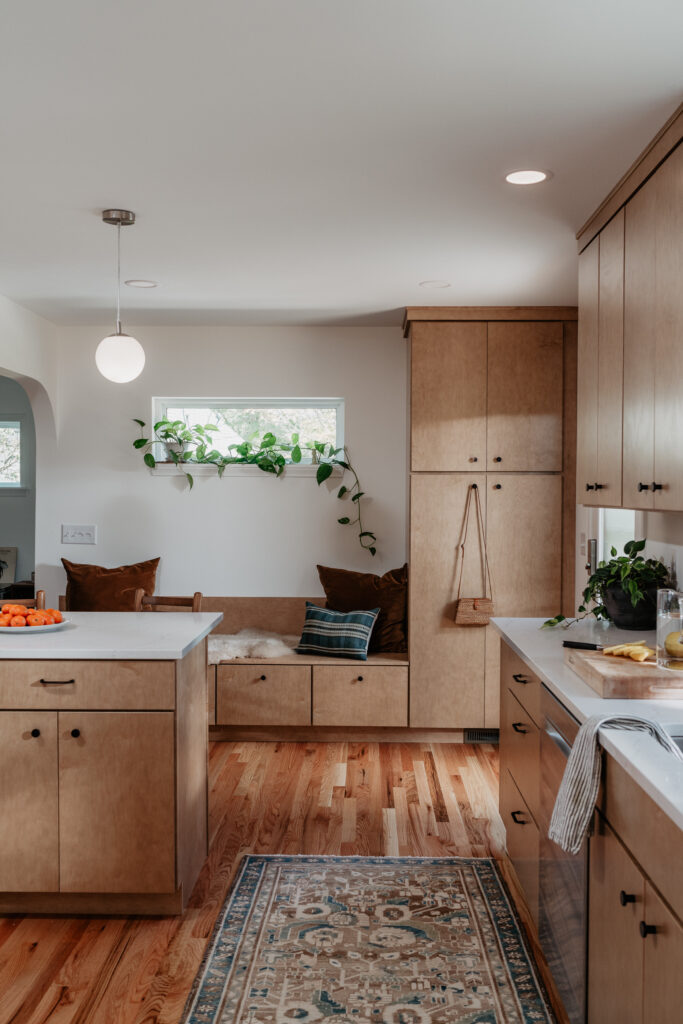
In Midcentury Modest, an entry pantry and a bench seat with storage drawers bring food storage, seating, and everyday organization into the entry. The drawers make use of the space beneath the bench while keeping stored items accessible.
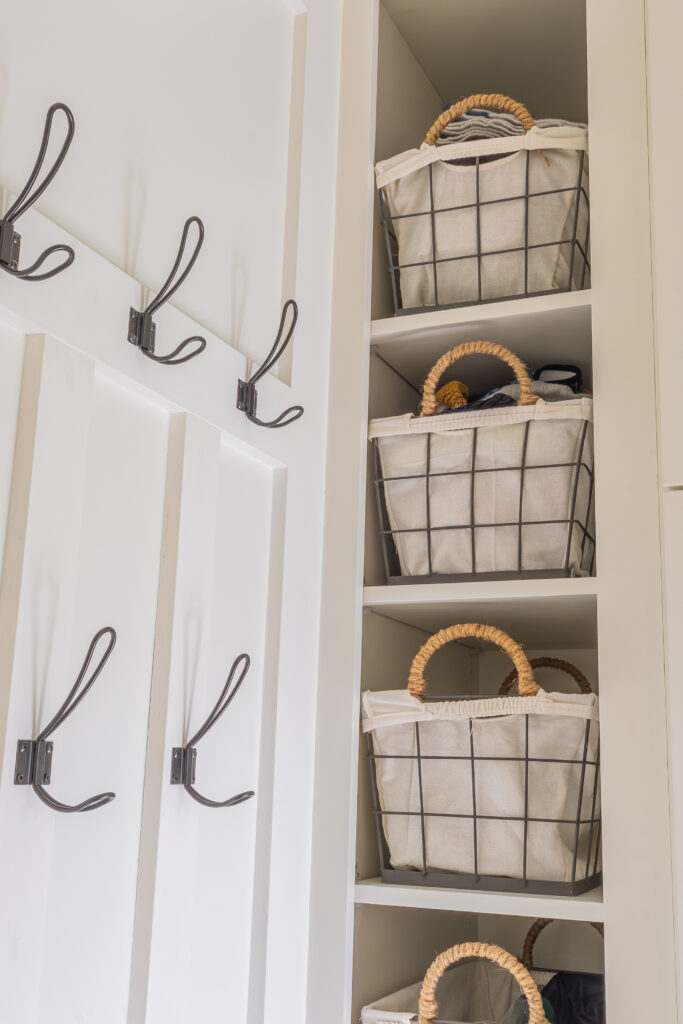
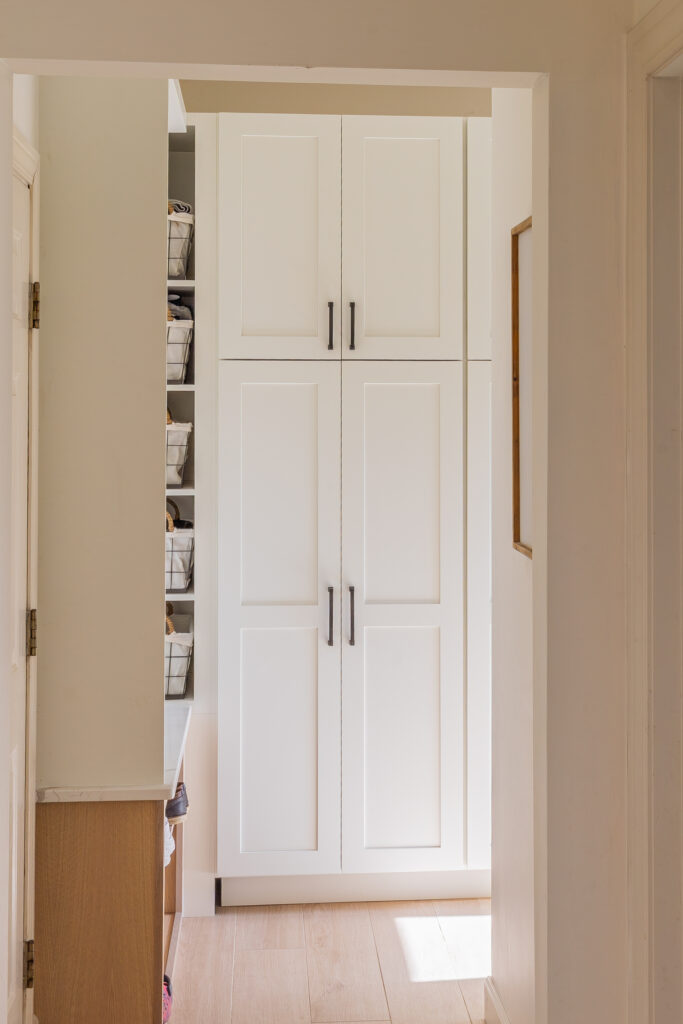
Our White Oak in Milan project also brings attention to both the laundry and entry—two areas where thoughtful cabinetry can have an impact on daily life. A bench offers a spot to sit with shelves for shoes below, hooks for coats and bags above, and to the right in a tricky corner, we used open shelves with baskets for all of the smaller accessories like gloves, hats, and dog leashes.
Plan Beyond the Cabinet Door
A well-designed room depends on more than how much storage it contains. Cabinet depth, shelf spacing, drawer placement, and door swings all affect how comfortably the space works.
Can you open a cabinet without blocking the path through the room? Is there enough clearance for a laundry basket? Are frequently used items within easy reach? Can the recycling come out without moving three other things first?
A balance of open and closed storage helps, too. Hooks keep everyday belongings accessible, while cabinets conceal bulk supplies and visual clutter. Adjustable shelves allow storage to change as children grow, routines shift, and household needs evolve.
Bring Good Design to Everyday Life
Mudrooms, laundry rooms, and drop zones handle a remarkable amount of daily activity. They can also feel welcoming and connected to the rest of your home.
Thoughtful materials and well-proportioned cabinetry bring care to these practical spaces. Just as importantly, a layout designed around your household gives the things you use every day a place that makes sense.
At Artistic Kitchens, we believe these everyday details deserve good design. Sometimes, the difference is as simple as having somewhere to put your bag when you walk through the door.
Leave a Reply