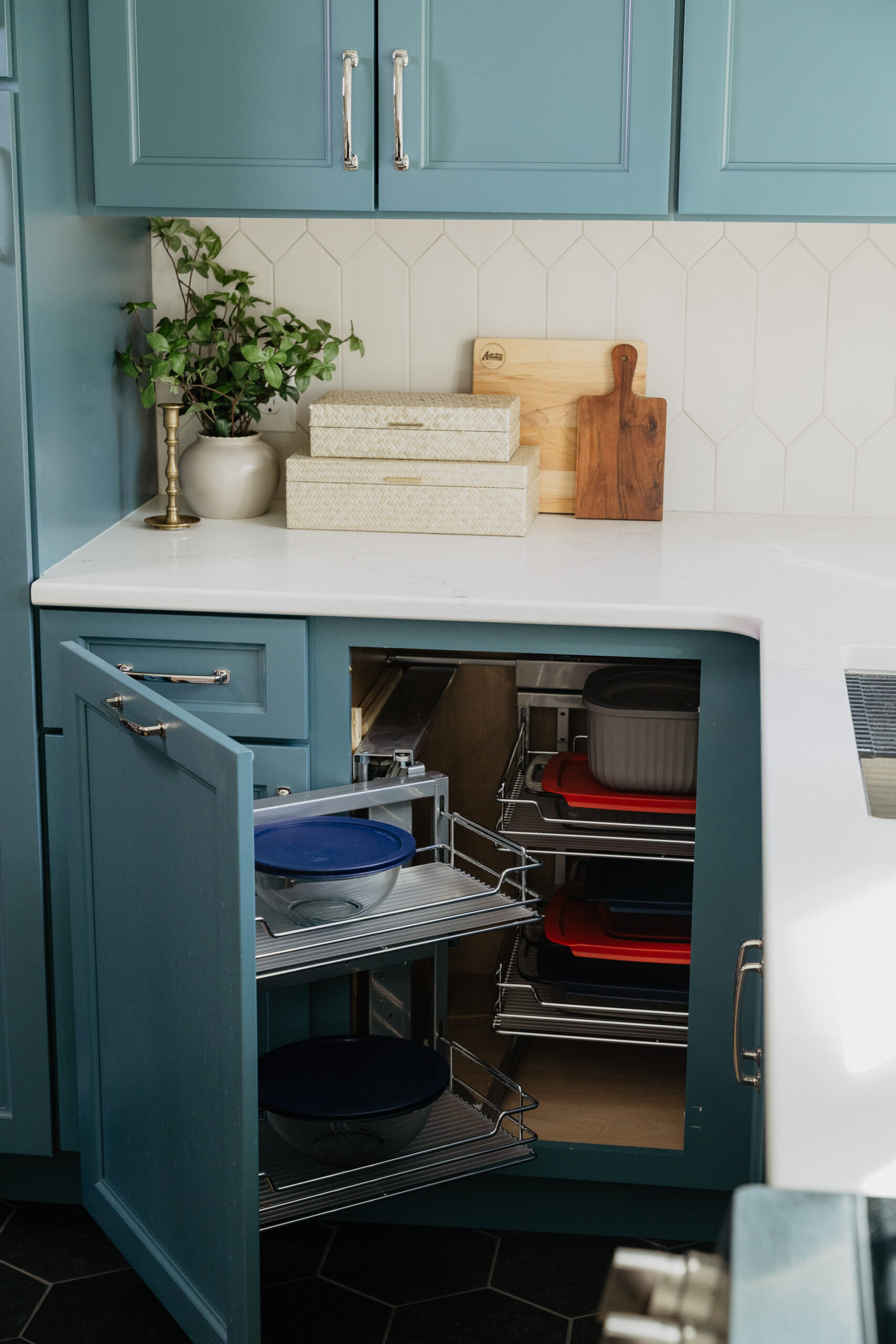
Corners can be some of the trickiest spaces to plan in a kitchen. Two runs of cabinets meet, and suddenly there’s a deep space that’s difficult to see into and even harder to reach. There are several ways to handle that corner, and the best choice depends on the layout, what you need to store, and the cabinets around it.
An experienced designer can help you weigh those options. Sometimes a specialty storage system is worth including. Other times, leaving the corner unused creates a more functional kitchen overall.
Blind Corner Cabinets
A blind corner cabinet extends behind the adjacent run of cabinetry, with a door that provides access from one side. It can offer a substantial amount of storage, but reaching into the far corner takes some effort.
Without an interior storage system, this space is often best suited to items you don’t use very often. A large roasting pan or seasonal serving piece may be fine tucked into the back. Everyday cookware is another story. If you have to unload the front of the cabinet every time you need something, that storage probably isn’t working well for you.
Bring the Storage Out with a Magic Corner Unit
Magic corner units make blind cabinets easier to use by bringing the contents toward you. Depending on the system, baskets or trays pull out and move aside so you can access the storage tucked behind the adjacent cabinets.
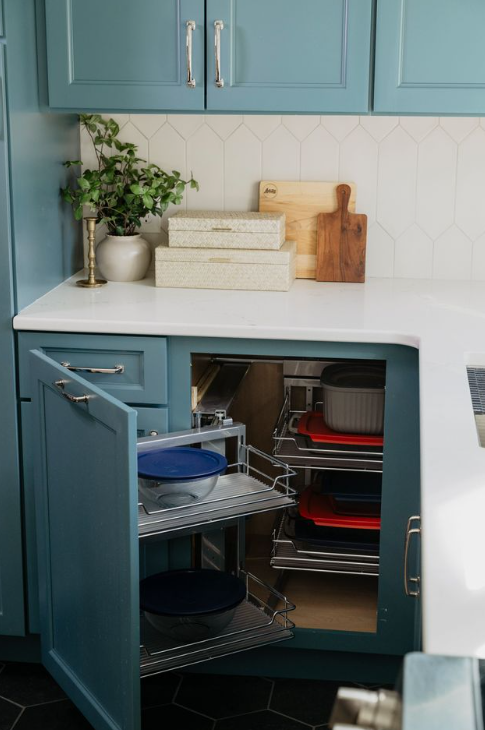
These systems can make a difficult corner much more useful, especially for cookware and small appliances. But the mechanism takes up some space, so we look at the usable tray sizes and weight limits along with the items you plan to store. We also consider the clearance needed for the system to open and move comfortably.
The goal is storage you can reach and use without a struggle.
Today’s Lazy Susans Deserve Another Look
If your experience with a lazy Susan involves a wobbly shelf that sticks or sends things tumbling into the back of the cabinet, it may be time to reconsider.
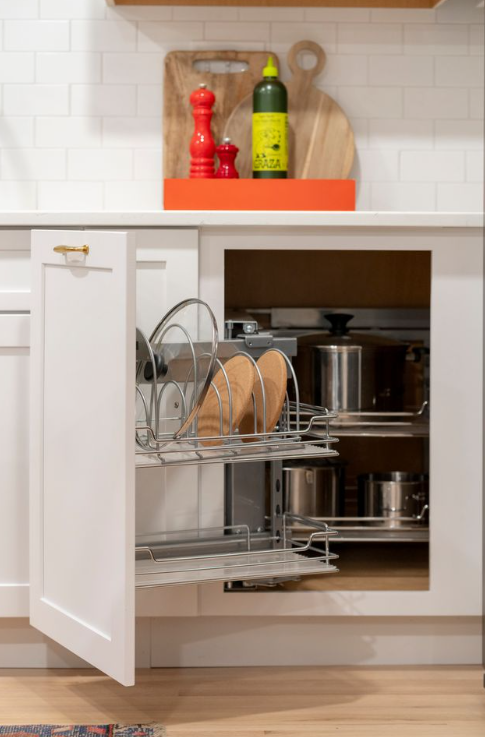
The lazy Susan systems we specify today are much better than many of the versions used decades ago. Independently rotating shelves allow you to turn one shelf without moving the other, while ball-bearing mechanisms provide smooth motion. That makes it easier to bring the item you need to the front.
A well-made lazy Susan can be a practical place for pots, mixing bowls, or other frequently used kitchen items. The quality of the hardware matters, as does choosing a shelf configuration that fits what you own.
When a “Dead” Corner Makes Sense
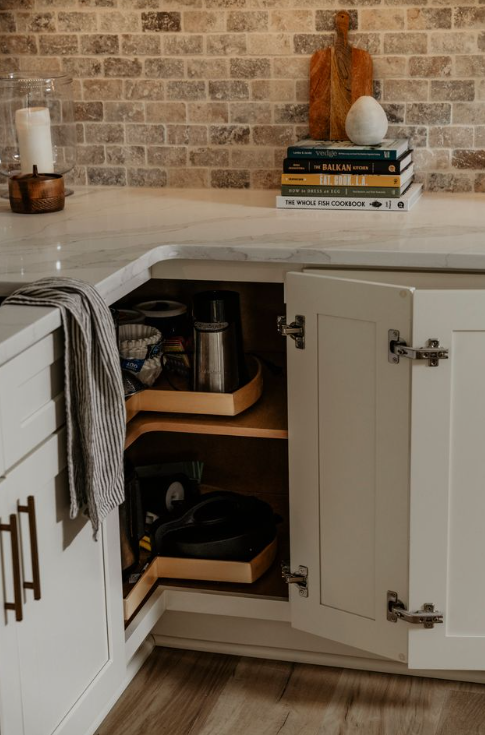
It can feel counterintuitive to leave part of a kitchen unused, but sometimes a dead corner is the best choice.
Accessing a corner requires a cabinet opening, and that opening takes space away from the cabinets beside it. By closing off the corner, we may be able to include wider drawers or larger adjacent cabinets that are easier to organize and use.
For example, a generous drawer cabinet beside the range may serve your daily cooking routine better than a narrow drawer bank paired with corner storage. We look at the usefulness of the whole layout rather than trying to make every inch accessible at any cost.
Options for Wall Cabinet Corners
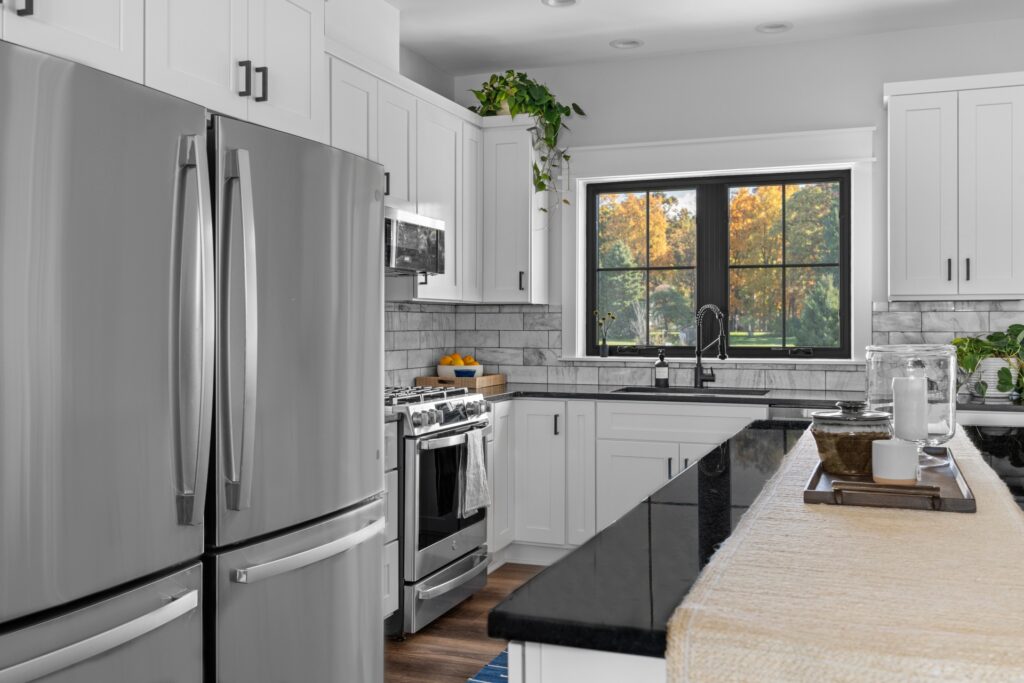
Upper corners have their own set of possibilities. An L-shaped wall cabinet with bifold doors opens up both sides of the corner, giving you a wider opening to reach inside. Adjustable shelving lets us accommodate dishes and serving pieces of different heights.
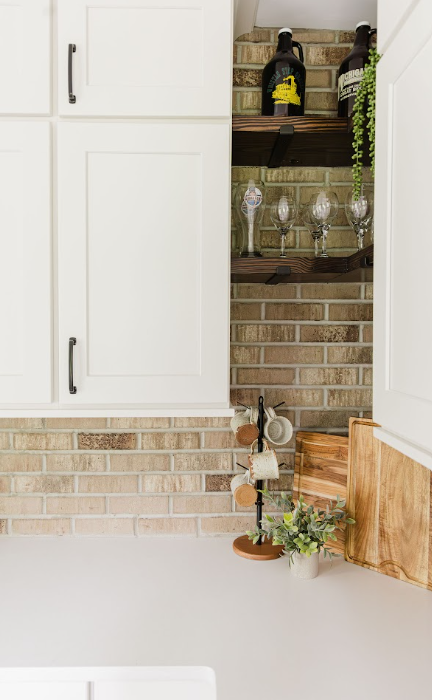
A diagonal corner cabinet is another option. Its angled front creates a single door opening across the corner. Depending on the kitchen, this can work well for larger pieces, though we still need to consider the depth of the cabinet and how comfortably you can reach its contents.
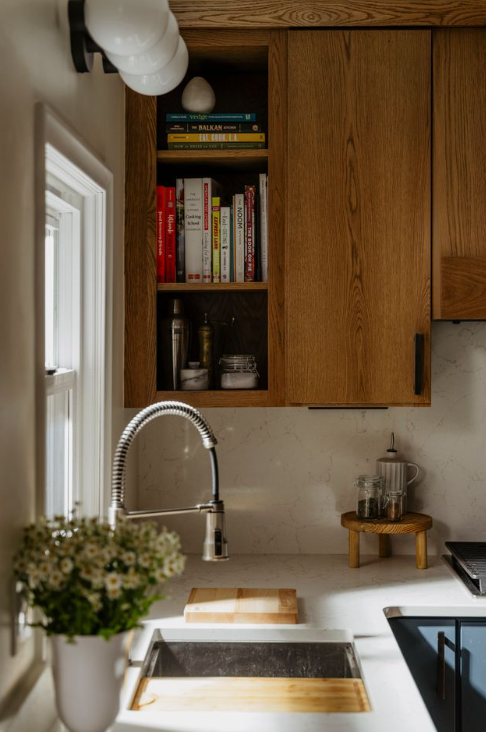
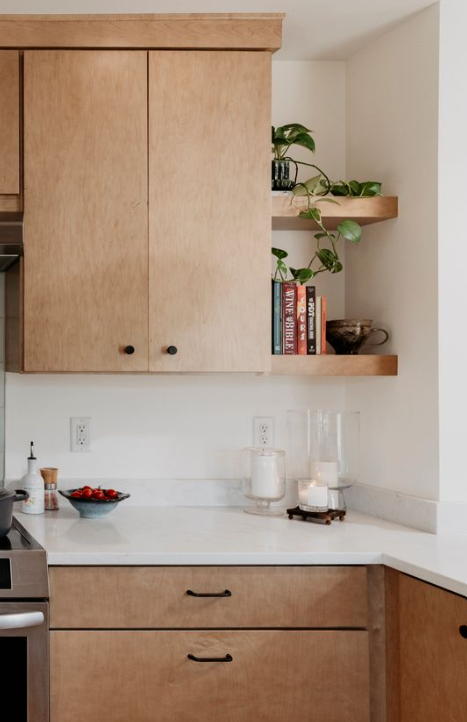
Sometimes, when we’re ending a run of wall cabinets, I like to add an open bookshelf against the adjoining wall. It’s a convenient spot for decor and cookbooks, allowing you to see the titles and grab one without opening a door or reaching around it. It also gives a narrow space a useful purpose.
Choose the Corner That Works for Your Kitchen
There isn’t one corner solution I recommend for every project. A blind cabinet, magic corner unit, lazy Susan, or dead corner can each be the right choice in the right layout.
At Artistic Kitchens, we consider the corner alongside the rest of your storage. What needs to go there? How often will you use it? What could the neighboring cabinets provide instead? Answering those questions helps us create a kitchen that’s comfortable to use, including the places that are hardest to reach.
Leave a Reply