Cabinetry and countertops tend to get the first look during a kitchen remodel. But the range hood deserves a place in that conversation. Positioned above the cooking surface, it can anchor an entire wall, create a quiet break between cabinets, or become the detail that gives the room its own identity.
For homeowners remodeling in Ann Arbor, Saline, and the surrounding communities, the choices go well beyond an exposed stainless steel appliance. A hood can resemble a piece of furniture, echo the cabinetry, or introduce a sculptural shape. The best starting point is to consider two things together: how the kitchen will look and how you actually cook.
Start with the air, then the exterior
A decorative hood and its ventilation equipment are separate parts of the same design. With a custom wood or painted surround, a concealed insert does the working job beneath the finished exterior. Selecting that equipment early helps establish the dimensions of the enclosure.
Venting outdoors sends cooking exhaust through ductwork to the exterior. It is generally the preferred approach for frequent cooking, particularly frying, searing, and high-output gas cooking. Recirculating hoods filter grease and odors before returning air to the kitchen. They can be useful where exterior ducting is impractical, but they do not carry cooking heat and moisture outdoors. Charcoal filters also need replacement according to the manufacturer’s instructions.
In an older home, a proposed duct route deserves attention before the cabinet layout is finalized. Moving the range may change the work needed to reach an exterior wall or roof. A recirculating installation also needs a compatible unit and a planned return-air path; the air cannot simply disappear inside a decorative enclosure.
The ventilation method does not have to dictate the style. A thoughtfully specified system can sit behind a traditional wood surround or a clean painted form.
Wood, paint, or metal?
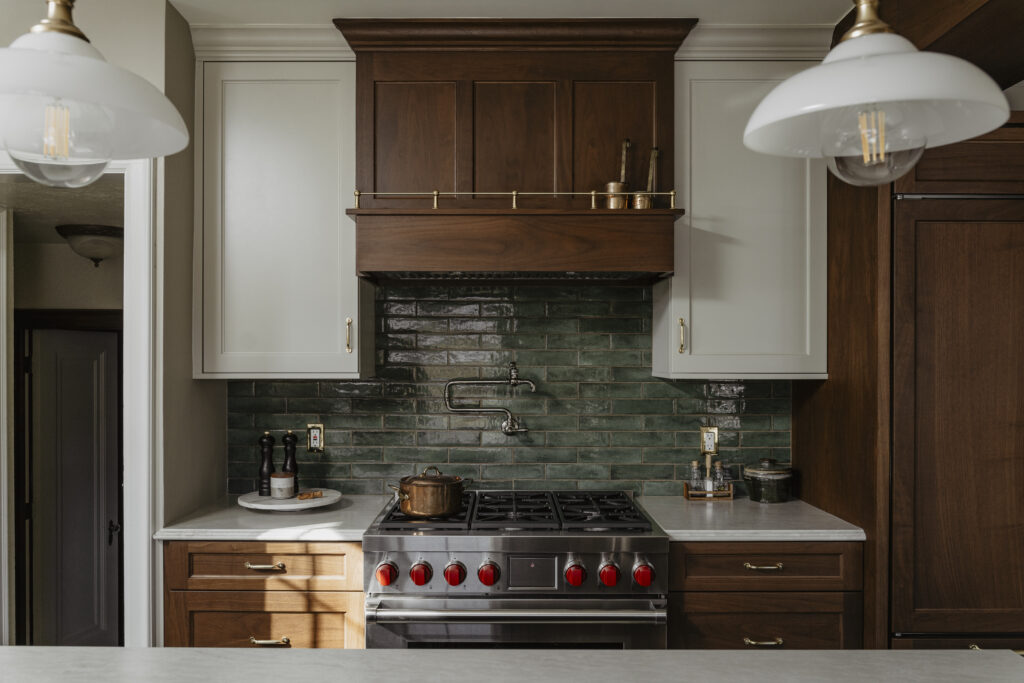
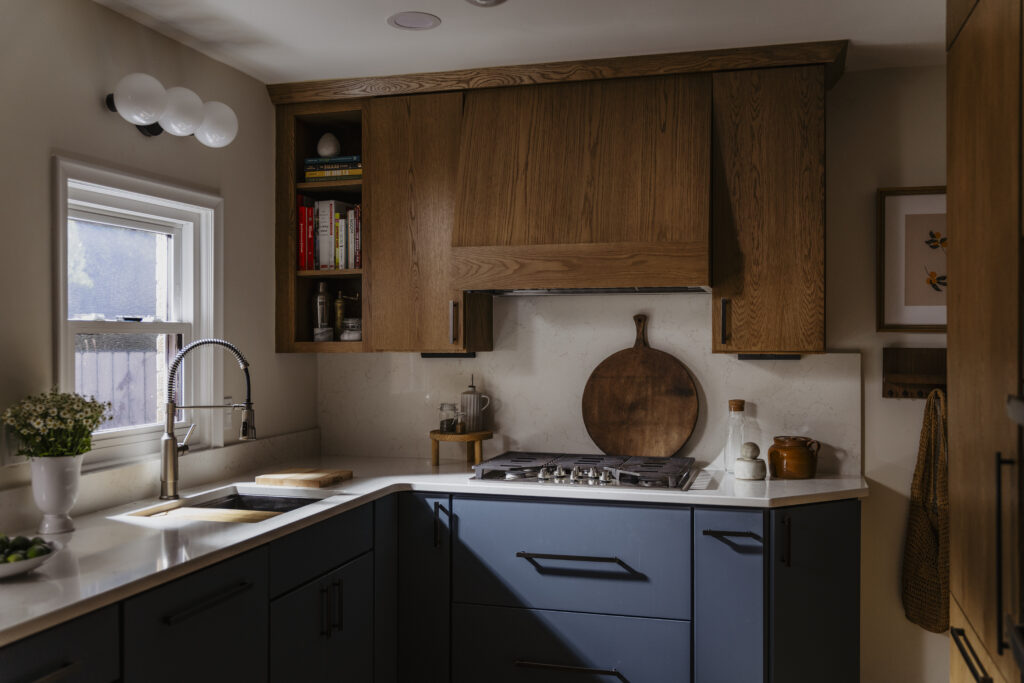
Stained wood puts grain and craftsmanship at the center of the design. It can connect the cooking wall to a wood island, nearby shelving, or the surrounding cabinets. Its effect depends as much on the shape as the species: a simple wood hood feels very different from one with crown molding, panels, and a substantial lower rail.
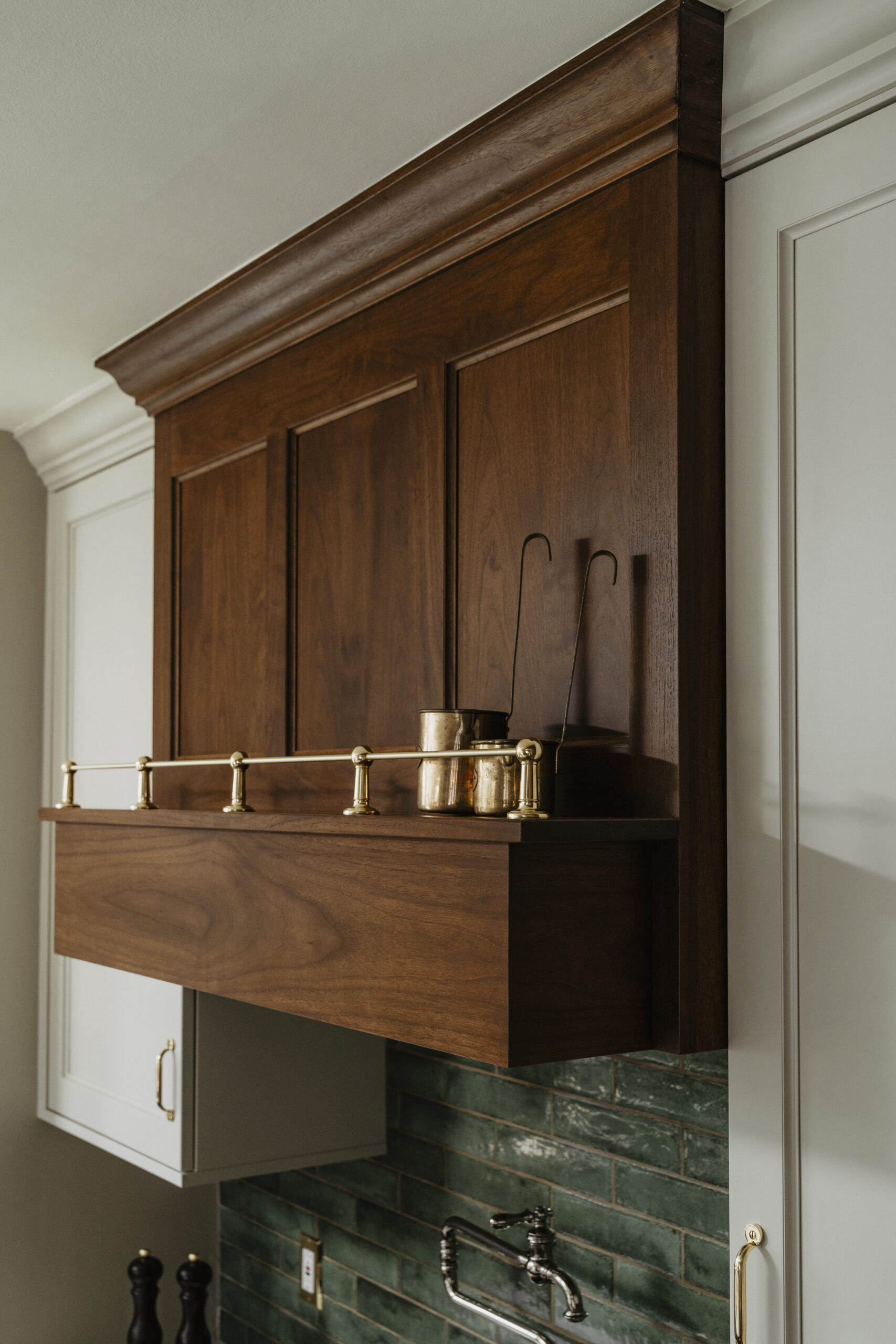
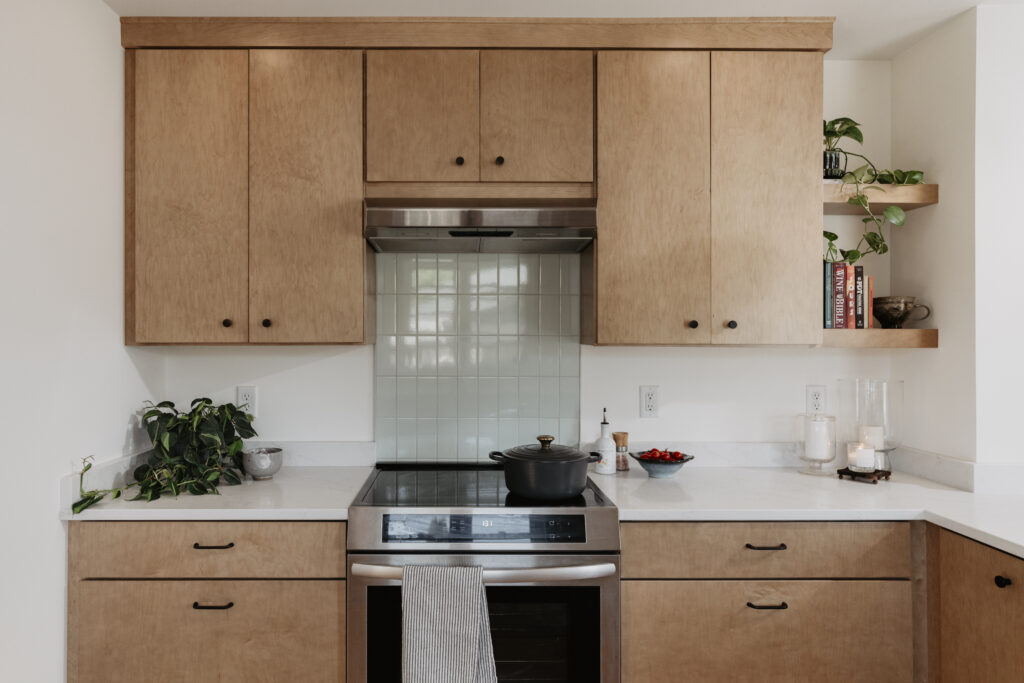
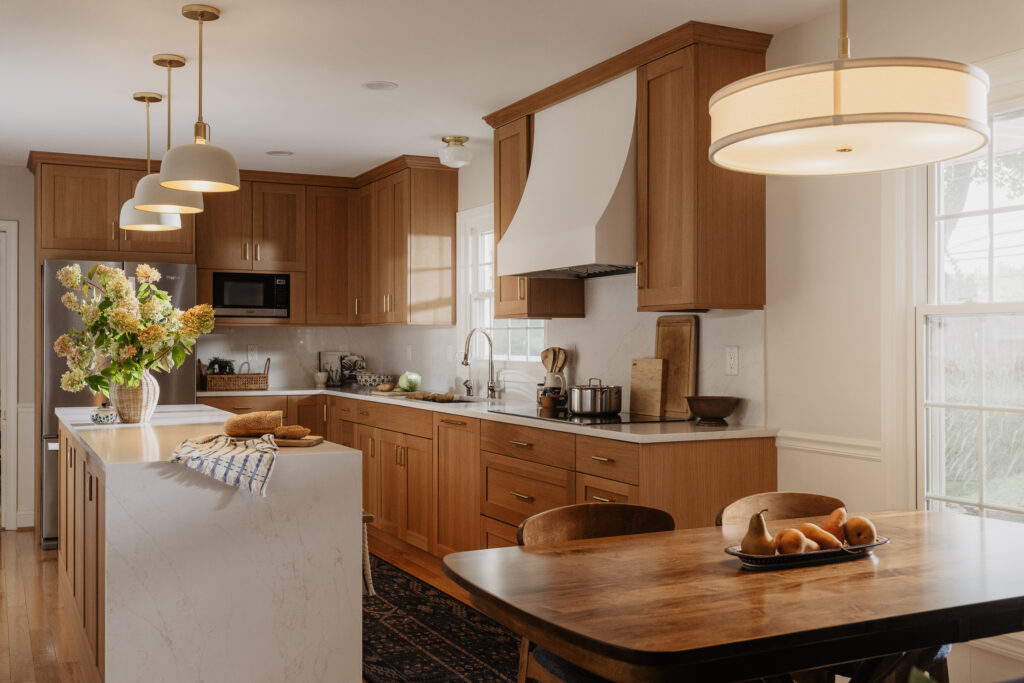
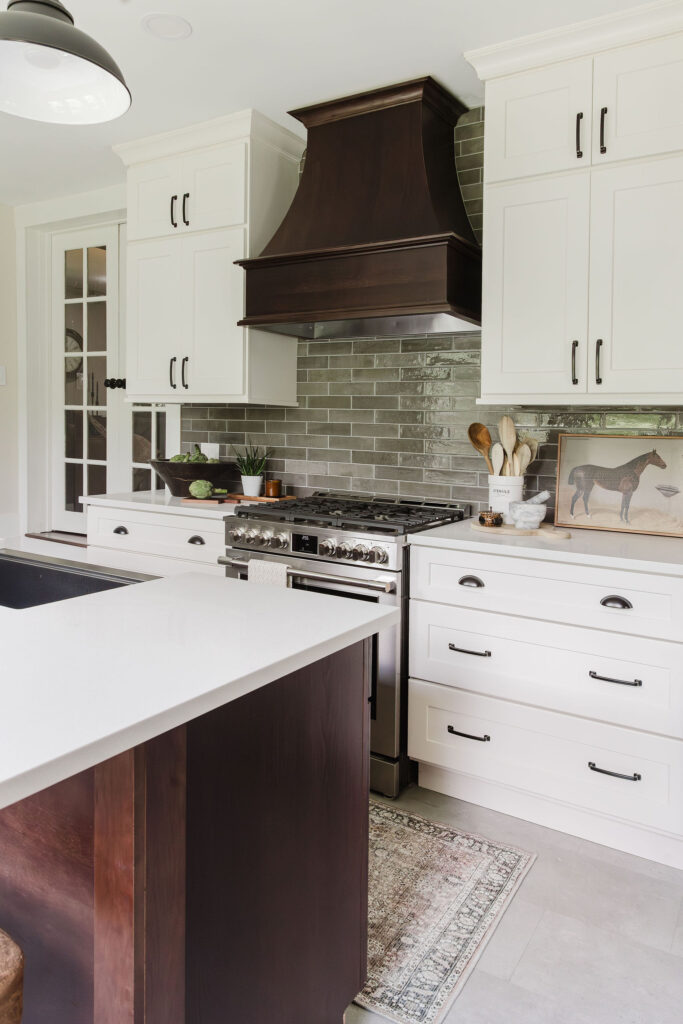
Artistic Kitchens’ portfolio illustrates that range. One design carries the wood cabinetry across the cooking wall with a restrained, integrated hood. Another uses dark stained wood, paneled detailing, and a brass rail to give the hood the presence of a furniture piece. A display ledge offers yet another interpretation, making room for artwork within the composition.
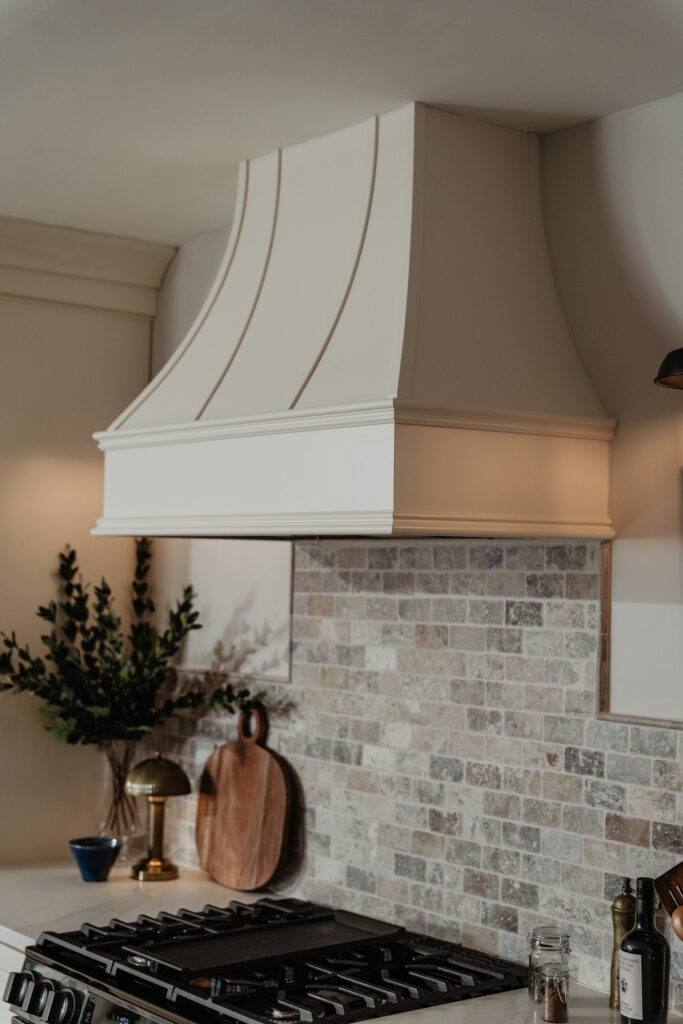
Painted surrounds shift attention toward silhouette and detail. A pale painted hood can keep a wall feeling light, while a deeper color creates a stronger focal point. Paint also makes it possible to coordinate the hood with cabinetry without repeating every door detail. The portfolio’s white curved hood against wood cabinets shows how effective that separation can be.
Metal hoods offer a different vocabulary. Stainless steel can establish a crisp, appliance-forward look; brass, copper, or a dark metal finish can feel more decorative. Consider whether the finish is intended to stay consistent or develop a patina, and review its care requirements. Metal can also appear as a smaller detail, such as a band or rail on a wood or painted hood.
Should the hood match the cabinets?
Matching the hood to the main cabinetry creates continuity. This can be especially appealing when the backsplash, countertop, or lighting already makes a strong statement. A matching finish lets the hood take its place within the room without competing for attention.
An accent finish gives the cooking wall a more distinct identity. Think stained wood among painted cabinets, a soft white hood between oak uppers, or a deep blue hood that repeats the island color. Contrast does not need to be dramatic to be effective.
Before adding another color, look at what is already in the room. Repeating a finish from the island or another visible element can make the hood feel connected to the broader design. A two-finish hood is another option: a painted body with a wood lower band, for example, can bridge painted and stained cabinetry.
Flat, tapered, or curved ends?
The hood’s side profile affects its presence just as much as the front. Flat ends create a straight-sided, more boxlike form and allow cabinets to be placed directly against it. With minimal trim, the result can feel tailored and contemporary; with panels and molding, it can read as traditional millwork.
Tapered ends narrow toward the top, giving the hood a broader base and a lighter upper silhouette. This shape can frame the range while leaving more visible wall around the upper portion. Artistic Kitchens’ tapered wood and painted examples show how the same basic geometry works across different finishes. While this provides visual breathing room and a spot for some accent lighting, it does limit storage space in wall cabinets around the range.
Curved ends introduce a softer transition. A gentle sweep can soften a wall of rectangular cabinets, while a more pronounced curve gives the hood a sculptural presence. The portfolio’s curved painted designs demonstrate both the importance of proportion and the effect of added vertical detailing.
Ask to see the hood from the side as well as the front. In an open kitchen, the view from the dining table or living room may be the one you notice most often.
Make the decision as part of the room
Before approving the design, review the hood with the range, backsplash, adjacent cabinets, and ceiling height. Confirm equipment fit, required clearances, lighting, sound levels, and access for filter cleaning with the selected manufacturer’s specifications.
Whether your home is an Ann Arbor bungalow, a Saline farmhouse, a Detroit tudor, or a newer house with an open main floor, the hood should belong to its setting. Start with the cooking needs, then choose the material, color, and profile together. That gives this hardworking feature a clear role in both the daily routine and the finished room.
Leave a Reply