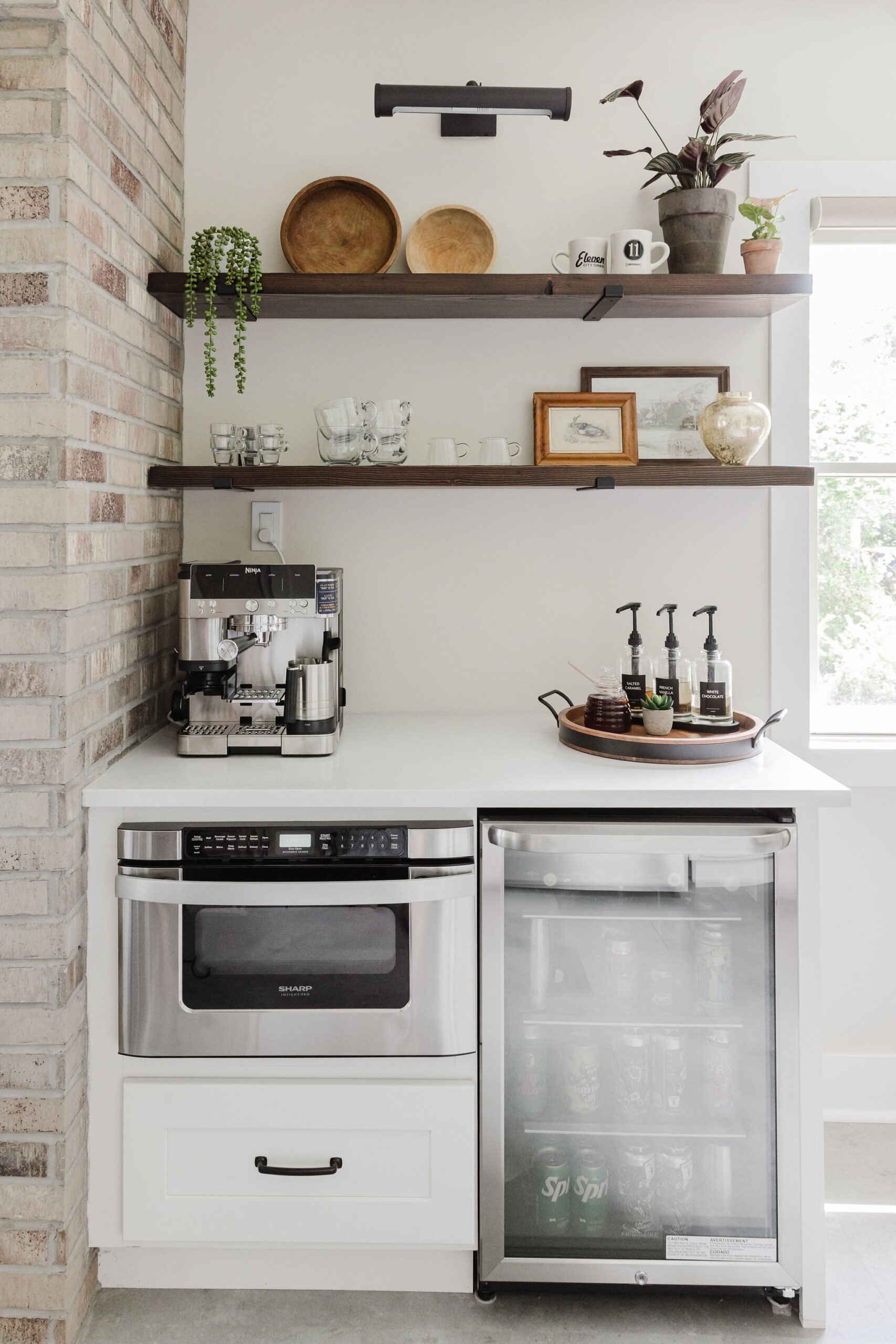
Some of the most useful details in a kitchen are the ones that keep everyday items close at hand. Open shelving gives frequently used dishes, bowls, and cookbooks an accessible home while making space for artwork, plants, and pieces collected over time. It also offers a break from a continuous wall of cabinets, allowing the kitchen to feel more personal and less enclosed.
The key is to design shelves around what you want to keep on them. A shelf for stacks of dinner plates needs different proportions than a ledge for artwork or a few cooking essentials. Material, depth, support, and lighting all contribute to how well the shelves work and how they fit into the room.
Choose a material that connects to the kitchen
Open shelves can be made from a variety of materials. Wood shelves can match the species and stain of the cabinetry, creating continuity across the room. Painted shelves can repeat the cabinet color for a similarly cohesive look.
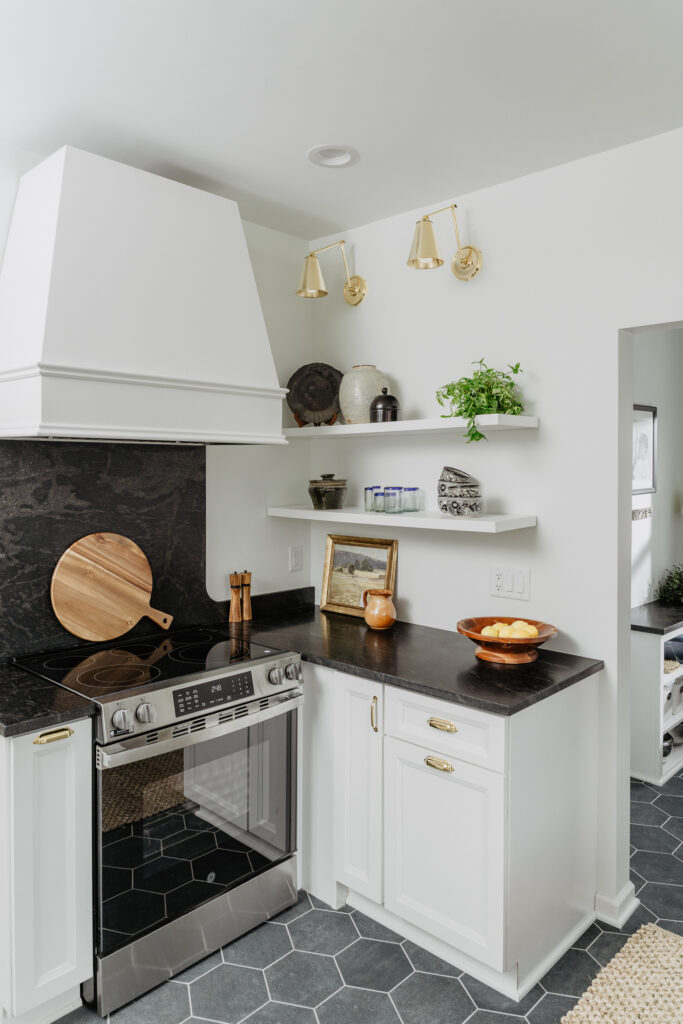
An accent finish offers another direction. Natural wood against painted cabinets introduces grain and texture, while a painted shelf can bring a little color into a wood kitchen. The shelves might also repeat the finish of an island or another nearby feature.
Stone shelves made from the same material as the countertops create a particularly clean connection between surfaces. They can be a beautiful way to carry the countertop material up the wall, especially beside a sink or range. Reclaimed wood offers a different effect, with variations in grain, wear, and texture that make each shelf distinct.
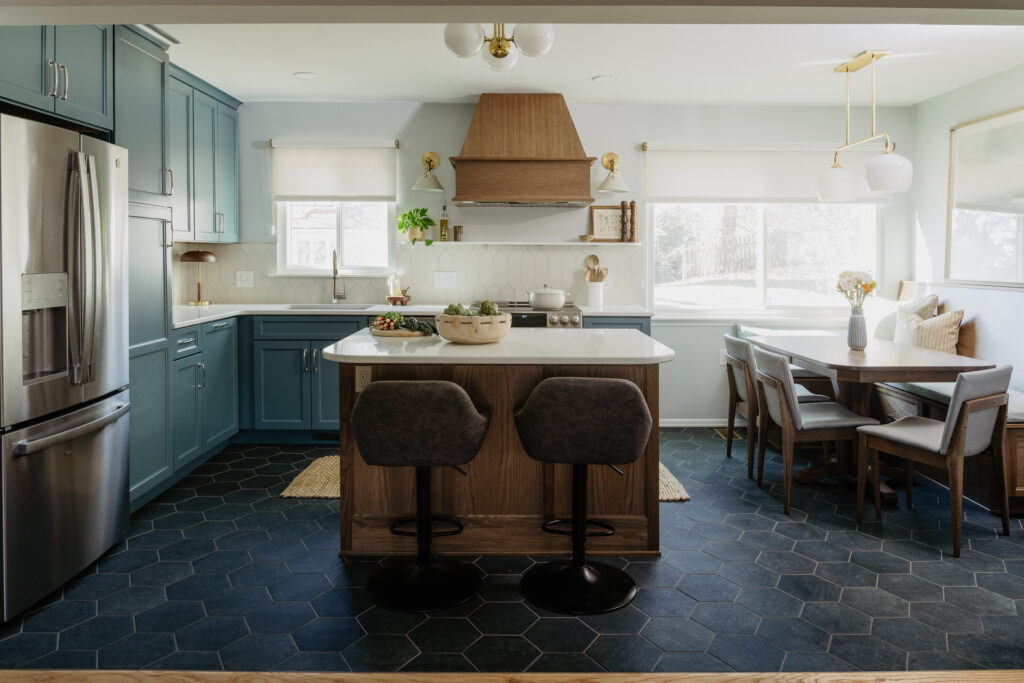
The right choice depends on the surrounding finishes and the role you want the shelving to play. It can blend into the cabinetry or become a detail you notice.
Let the contents determine the depth
For shelves that hold a combination of functional and decorative items, we often start with a depth of around 10 to 12 inches. This works well for many everyday dishes, bowls, glasses, and cookbooks, though we always check the dimensions of the actual items before finalizing the design.
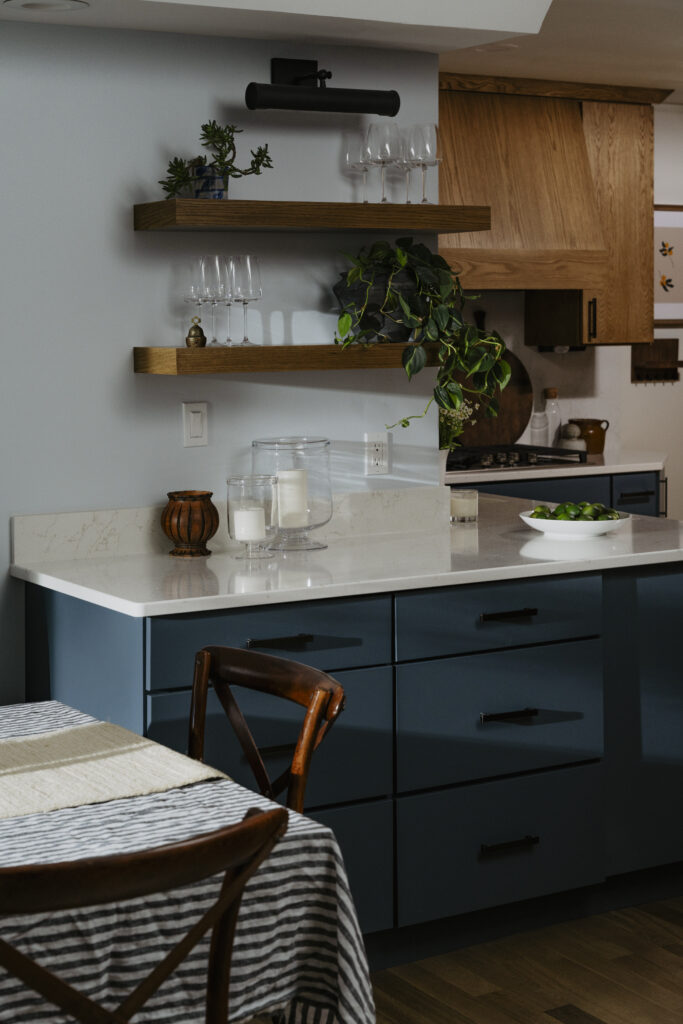
Open shelving is a wonderful spot for your most-used dishes because it makes them easy to grab and put away. Rather than storing every plate and serving piece in view, consider keeping the items you reach for daily on the shelves and using closed cabinets for the rest.
For stone shelves, we typically use a shallower depth of around 4 to 8 inches, with hidden steel support designed for the material, span, and intended load. These smaller ledges can be useful near a range for salt, pepper, and olive oil, positioned appropriately away from heat. Near a sink, they offer a spot for a small plant, artwork, or a favorite decorative piece.
Shelf length and spacing can vary, too. A short shelf beside a window might hold just a few objects, while a longer run can accommodate dishes and books. Leaving enough room between shelves for taller items helps the arrangement feel comfortable rather than squeezed into place.
Hidden supports or decorative brackets?
The support system is part of the design. Hidden brackets create the clean look of a floating shelf, allowing the material and its contents to take the focus. Planning those supports early helps us coordinate the necessary wall backing before the finishes are installed.
Decorative exposed brackets give shelves a different presence. Their shape and finish can connect to cabinet hardware, lighting, or other details in the room. A simple metal bracket can suit a restrained kitchen, while a more detailed bracket can complement traditional cabinetry or reclaimed wood.
Either approach needs to account for the shelf material and what it will hold. A shelf displaying a few small objects has different demands than one carrying stacks of dishes.
A simple approach to styling
When styling shelves, I like to think in terms of 40% decorative items, 40% functional items, and about 20% white space. It is a loose visual guide rather than a formula to measure, but it helps create a balance between everyday use and display.
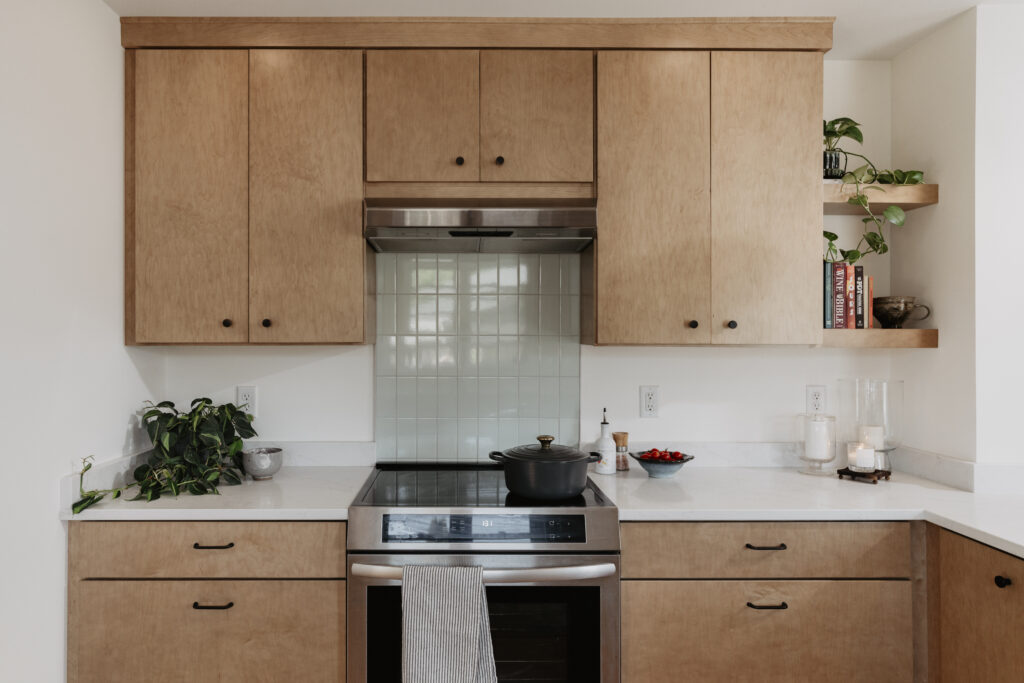
The functional portion might include bowls, plates, drinking glasses, or mugs that deserve an easy-to-reach spot. Decorative pieces can include artwork, plants, a favorite vase, or mementos that have meaning to you.
The white space matters just as much. Leaving portions of the shelf empty gives individual pieces room to be seen and makes it easier to take something down without rearranging everything around it. You do not need to fill every inch simply because it is available.
Start with the items you use most often, then add a few pieces you enjoy seeing. The arrangement should feel natural to your household and easy to maintain.
Give cookbooks a place of their own
Many of today’s clients want a dedicated spot for cookbooks. Shelves around 10 to 12 inches deep can accommodate many books stored traditionally, with their spines facing out. Checking the largest volumes helps determine the right depth and spacing.
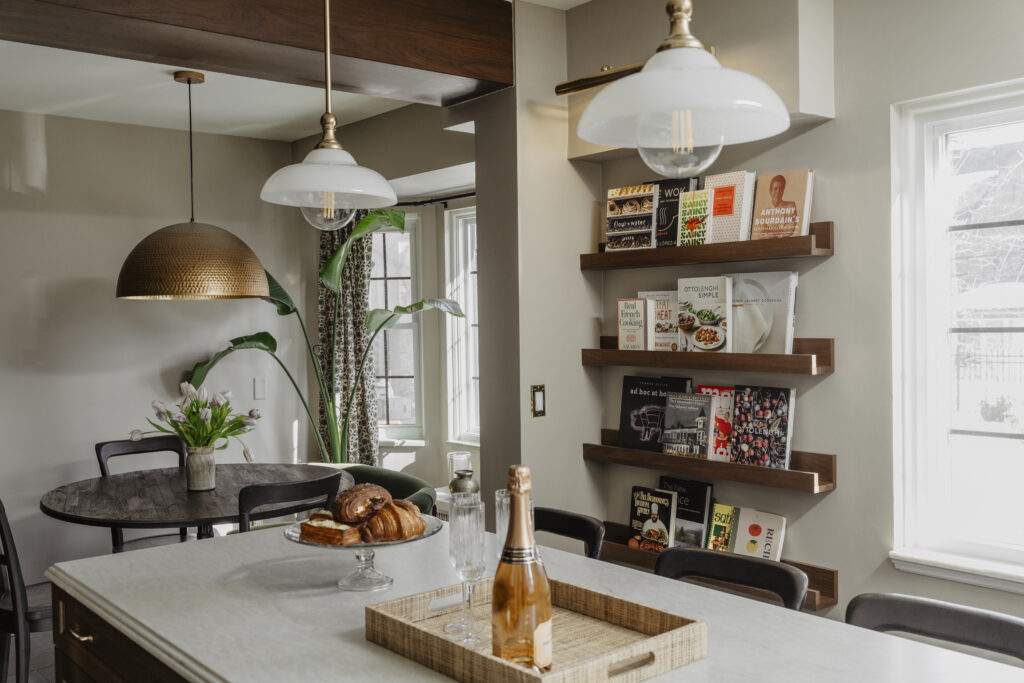
A shallow ledge offers another option: displaying books with their covers facing forward. This works especially well for a few favorites with beautiful photography or a cookbook you are currently using. The covers become part of the kitchen’s visual composition, and the selection can change whenever you like.
Finish with lighting
Lighting can make open shelving feel more intentional. A picture light or sconces above a shelf add a decorative detail while drawing attention to the objects below. Their placement should work with the shelf heights, nearby cabinets, and the items being displayed.
Thoughtfully designed open shelving gives everyday favorites a place within the finished kitchen. Whether it is a wood shelf filled with bowls and cookbooks or a slim stone ledge holding just a few pieces, the best arrangement is one that supports your routines and leaves room for the things you love.
Leave a Reply